



The Legacy Journal Cotton
Sea Island cotton explained
The rarest cotton in the world, why it costs so much, and how to tell a genuine Sea Island garment from a marketing claim.
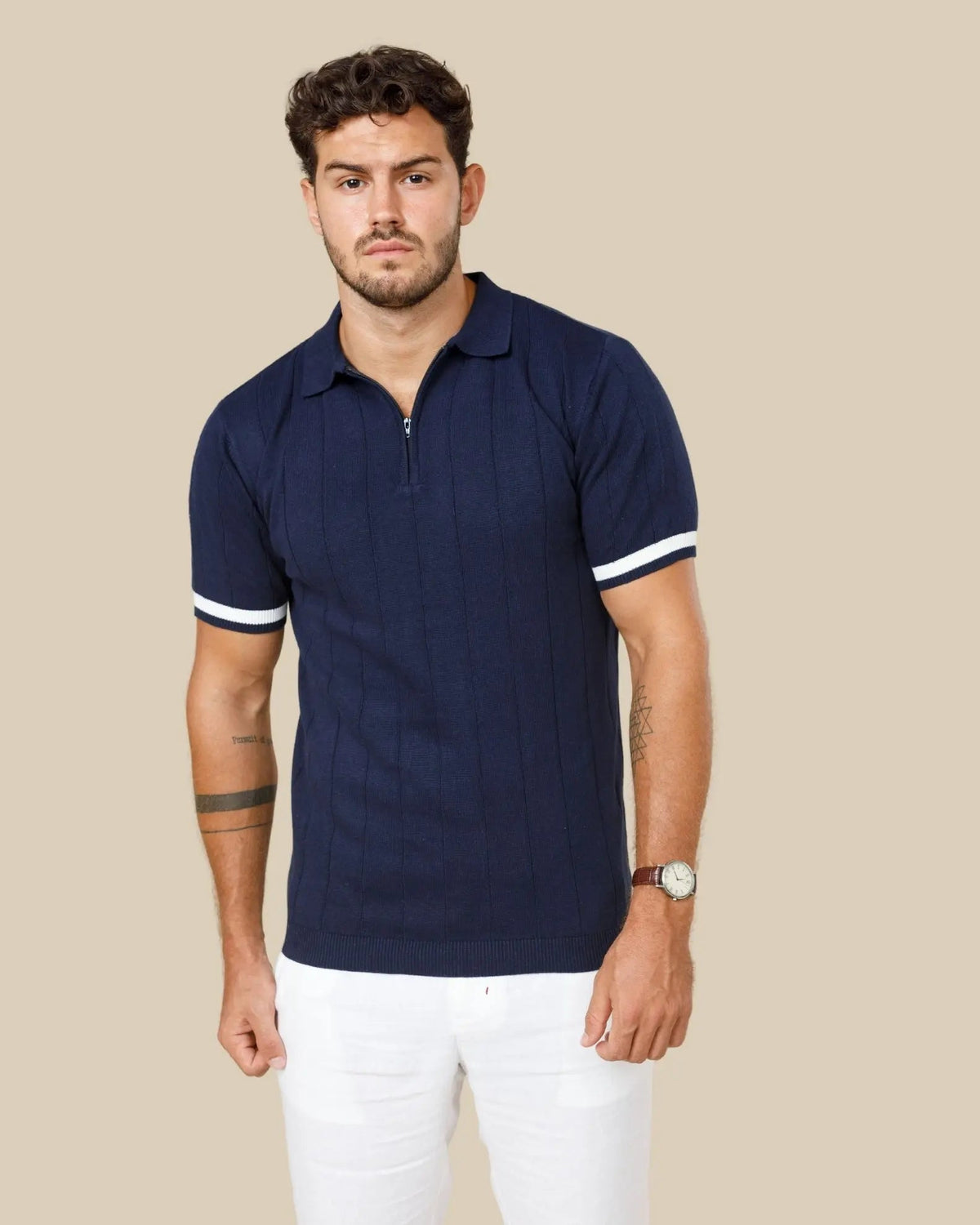
The pieces in this guide.
Knitted in Sri Lanka since 1997.

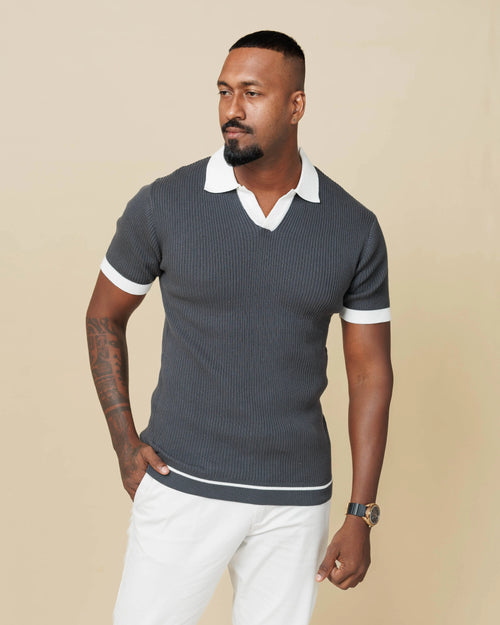
Sea Island cotton is the rarest cotton in the world. It is an extra-long staple variety of Gossypium barbadense, grown in the West Indies, and its fibres are longer, finer and silkier than those of ordinary cotton. Spun into yarn, they make fabric with a soft sheen, a cool, smooth hand and a lasting softness.
It costs more than other cottons because very little of it exists. Only a small crop is grown each year, and genuine supply is certified. The name is also borrowed freely, so it helps to know what the term means and what it does not.
What is Sea Island cotton?
Sea Island cotton comes from the islands of the West Indies, with Barbados and Jamaica the best known. The plant is a long-staple species, and the climate and sandy island soil have long produced fibres of unusual length and fineness. Its cultivation has been tied to fine shirting and handkerchiefs since the eighteenth century.
The word "Sea Island" describes a place and a standard, not a weave or a finish. A shirt is Sea Island cotton only if the fibre in the yarn is Sea Island cotton.
Why fibre length matters
Cotton is made into yarn by a process called spinning: short fibres are drawn out and twisted together. The longer the fibre, the fewer loose ends stick out of the yarn. Fewer ends mean a smoother surface, more lustre and less pilling.
Long fibres also make a stronger yarn at a finer thickness. That is why fabric from extra-long staple cotton can feel light and cool and still hold its shape through many washes. Ordinary upland cotton has shorter fibres, so its yarn is rougher and its fabric tends to fuzz sooner.
Why Sea Island cotton is so expensive
Three things drive the price.
- Supply is tiny. Sea Island cotton is a very small part of the world crop.
- The plant is delicate. The crop is easily damaged by weather and is picked and sorted with great care.
- Certification and traceability add cost, because the name is protected and has to be proved.
A garment sold as Sea Island cotton at an everyday price should make you stop and ask for the source.
How to spot the genuine article
Real Sea Island cotton is certified by the West Indian Sea Island Cotton Association, and the certification is the first thing to look for. A maker who uses the fibre will say so on the label, name the mill or the source and expect to charge for it.
The fabric gives clues too. It feels smooth and cool, shows a soft sheen rather than a shine, and keeps its surface after washing. None of these proves provenance on its own. Treat them as a reason to ask, not as a test.
Be wary of phrases such as "Sea Island quality" or "Sea Island style". They describe a look, not a fibre.
Sea Island vs Egyptian vs Pima cotton
All three are extra-long staple cottons from the same species, Gossypium barbadense. They differ in where they are grown and how the crop is handled.
- Sea Island is grown in the West Indies and is the rarest of the three.
- Egyptian cotton, including the Giza varieties, is grown along the Nile and is far more widely available.
- Pima cotton is grown mainly in the Americas and is easier to find than either.
The label does not settle quality. A well-grown, carefully spun Egyptian or Pima cotton can beat a poorly handled Sea Island crop, so judge the fabric as well as the name. Sea Island earns its reputation on rarity and consistency.
Where Legacy London knits fit
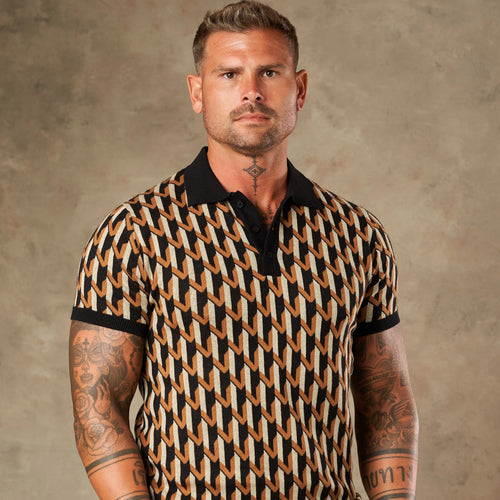
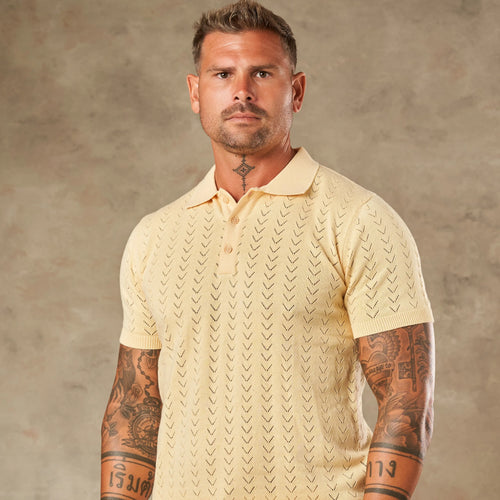
To be plain about it: Legacy London (formerly LCY London) does not use Sea Island cotton. Our knitted polo shirts are cotton knits, designed in London and knitted in Colombo. The 3D Optical Geometric Knit Polo Shirt and the Sorrento Chevron Knit Polo are recorded as 100% combed cotton.
Combing is a step that removes the shortest fibres before spinning, which leaves a smoother, more even yarn. It is a good practice, and it is not the same thing as Sea Island cotton. We would rather say that than borrow a name we have not earned.
How to care for fine cotton
The same rules suit fine cotton knits and shirts, whatever the fibre. Always follow the care label first.
- Wash cool, on a gentle cycle, and turn knits inside out.
- Use a mild detergent and skip fabric softener, which coats the fibre.
- Do not wring. Press the water out and reshape the garment.
- Dry flat or on a rack away from direct heat. Heat from a tumble dryer shrinks cotton and dulls the surface.
- Fold knits instead of hanging them, so the shoulders keep their shape.
If you want to know what finishing does to cotton, our guide to mercerised cotton covers the process.
Frequently asked questions
What is Sea Island cotton?
It is an extra-long staple cotton grown in the West Indies. Its fine, silky fibres make smooth, lustrous fabric, and genuine supply is very small.
Is Sea Island cotton the same as Egyptian cotton?
No, but they are close relatives. Both come from the same species, grown in different places. Sea Island is rarer. Egyptian cotton is grown along the Nile and is much easier to buy.
What is the difference between Sea Island cotton and Pima cotton?
Both are extra-long staple cottons. Sea Island comes from the West Indies and is scarcer. Pima is grown mainly in the Americas and is more widely available.
How can I tell if a shirt is really Sea Island cotton?
Look for certification from the West Indian Sea Island Cotton Association, a named source and a price that reflects the rarity. Wording such as "Sea Island quality" is not a claim about the fibre.
Are Legacy London knits made from Sea Island cotton?
No. Our knits are cotton, knitted in Colombo. We do not claim Sea Island cotton for any of them.


