



The Legacy Journal Cuban collar
How to wear a Cuban collar shirt
What actually makes a shirt a Cuban collar, how to wear it untucked without looking like fancy dress, and why the fabric decides how it looks.
The pieces in this guide.
Knitted in Sri Lanka since 1997.
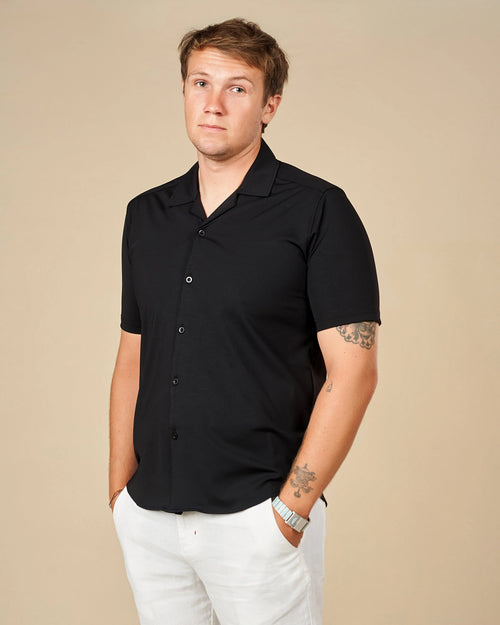
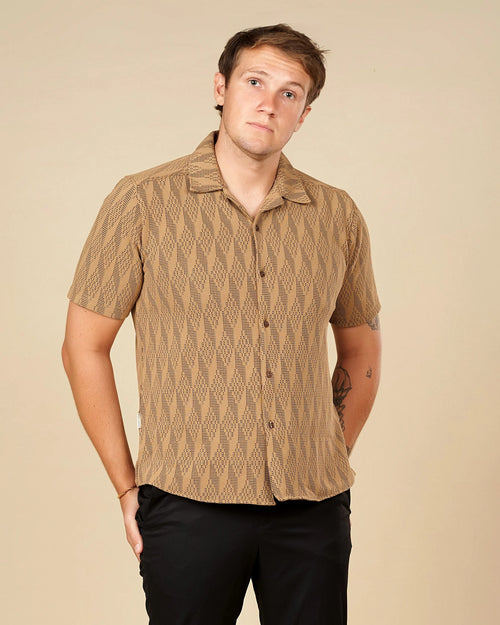
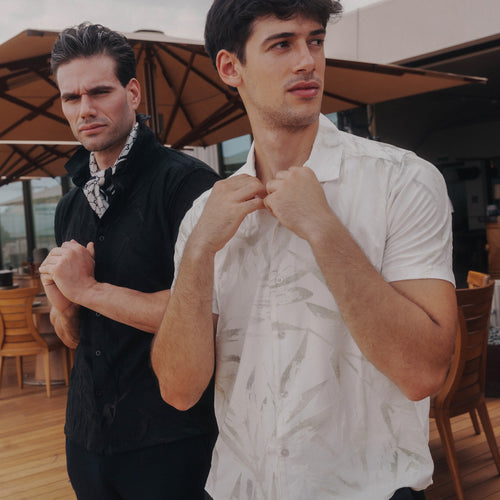
A Cuban collar shirt is the easiest way to look considered in warm weather without trying hard. The open, notched collar sits flat against the chest, the cut is boxier than a dress shirt, and it is designed to be worn untucked with the top button open. That is the whole formula. Get the fabric and the fit right and it works for dinner abroad, a Sunday in the city, or the office on the warmest week of the year.
This guide covers what actually makes a shirt a Cuban collar, how to wear one without it reading as fancy dress, and why the fabric decides whether it looks sharp or cheap.
What makes it a Cuban collar
Three things separate a Cuban collar from an ordinary casual shirt. The collar is cut in one piece with the lapel, so it folds open and lies flat rather than standing up around a top button. The placket is plain, with no stiff fused strip down the front. And the hem is straight, made to finish at the hip and stay untucked.
You will also see it called a camp collar or revere collar. Same shirt. The style spread from 1950s Havana through mid-century tailoring in Europe, which is why it still carries a faintly cinematic association: it is a shirt for being somewhere warm, on purpose.
How to wear one
Keep the rest of the outfit quiet and let the collar do the work.
Untucked, always. The straight hem should sit around the middle of your trouser fly. Longer than that and the proportions collapse; if the hem is curved like a dress shirt, it is not cut to be worn out.
Trousers over shorts, most of the time. Pleated linen or cotton trousers in stone, navy or olive give the shirt some structure to hang against. With tailored shorts it becomes resort wear, which is fine on holiday and less fine at a restaurant at home.
One button open, sometimes two. The collar is built to frame an open neck. A plain white or ivory vest underneath keeps it tidy if the fabric is light.
Layering works better than expected. In cooler months a Cuban collar sits neatly under a crew-neck jumper or an unstructured blazer, collar spread flat over the lapel. That single detail does more for a plain knit than any accessory will.
The fabric decides everything
Because the shirt is so simple, the cloth is exposed. A Cuban collar in a thin, shiny synthetic looks like a costume. In a fabric with real drape, it looks deliberate. And the two behave differently enough that it is worth choosing on purpose rather than by whichever is in stock.
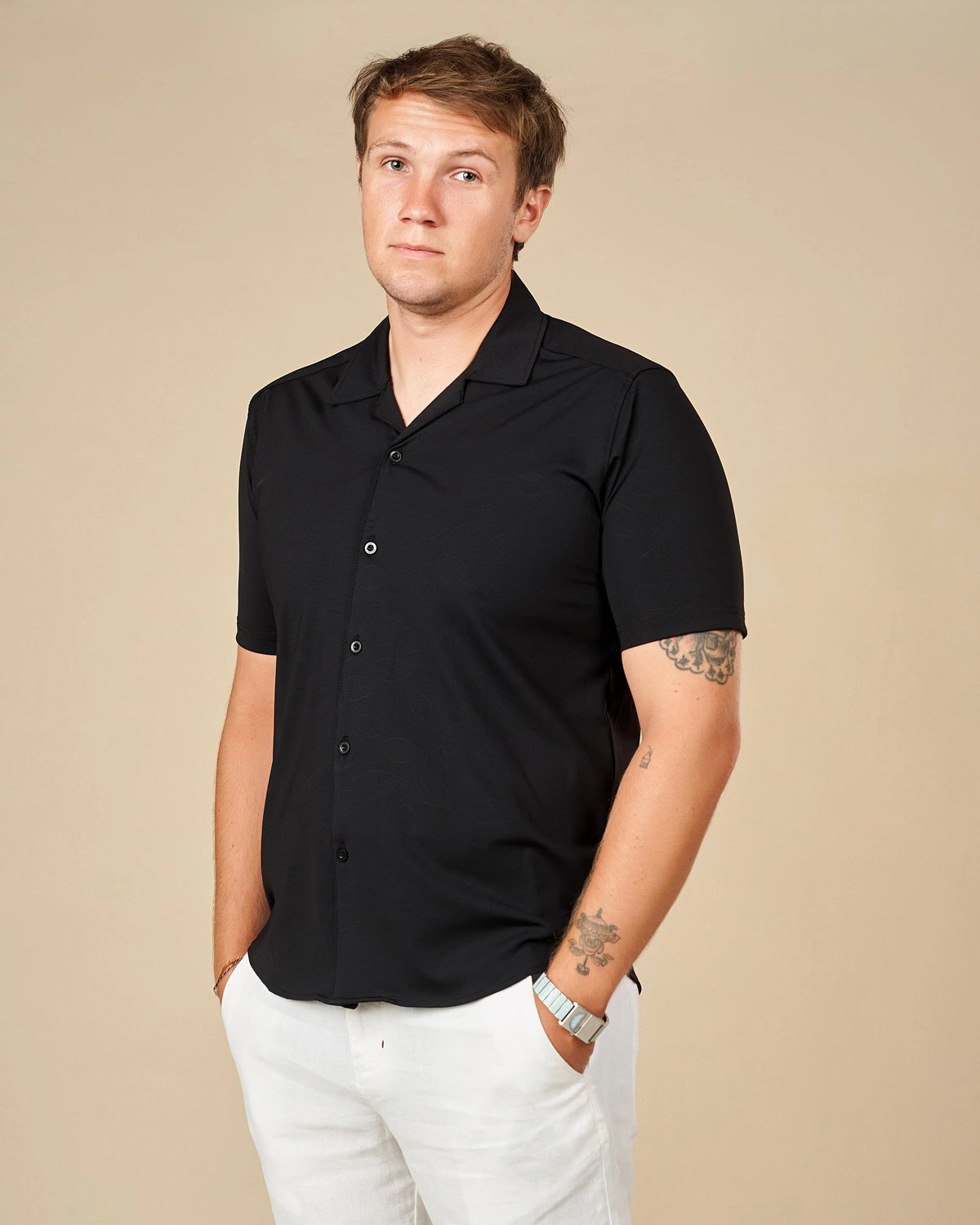
We cut one version in textured cotton. It hangs heavier than cotton poplin, so the collar keeps its line instead of curling, and it stays cool and dry against the skin in the kind of weather this shirt is made for. You can see it here: the textured cotton Cuban collar shirt. Every one is sewn in our own facility in Sri Lanka by a team whose average tenure is over twenty-five years, and the fabric is OEKO-TEX Standard 100 certified.
If you want more give in the cloth, our stretch Cuban collar shirt is cut from a four-way stretch weave that packs flat and moves with you, a genuinely different fabric brief for the same silhouette: better for travel and long days on your feet, where the textured cotton is better for an evening where the drape needs to hold. Browse the full men's shirts collection to compare the two side by side.
Where it fits in a small wardrobe
If you keep a lean rotation, one Cuban collar shirt covers the gap between a polo and a proper shirt. It is more relaxed than a button-down, more finished than a tee, and it pairs with everything the summer pieces already go with. Ivory, olive and deep navy earn their keep first; prints are the second purchase, not the first.
Common questions
Is a Cuban collar shirt smart casual?
Yes, at the relaxed end. With tailored trousers and leather sandals or loafers it passes almost any smart-casual door. It is not a substitute for a collared dress shirt where a jacket and tie are expected.
Can you wear a Cuban collar shirt in winter?
Under a jumper or blazer, yes. The flat collar layers better than a standard point collar because there is no stand to bunch at the neck.
Should a Cuban collar shirt be loose?
Relaxed through the body, but the shoulder seam should still sit on your shoulder. The style is boxy by design; sizing up usually tips it into shapeless.