



The Legacy Journal Fabric guide
What is mercerised cotton?
A cotton treatment dating to 1844 that gives knitwear its sheen, deeper colour and strength, and how to spot it before you buy.

The pieces in this guide.
Knitted in Sri Lanka since 1997.

Mercerised cotton is cotton yarn or fabric treated with a caustic soda bath while held under tension. The treatment swells the fibres, making them rounder and straighter, which gives the cotton a subtle sheen, deeper colour when dyed, and a firmer, smoother hand. The name comes from John Mercer, the Lancashire chemist who patented the process in 1844; the tension step that produces the lustre came later, from Horace Lowe. (American labels spell it mercerized; it is the same process.)
You have handled mercerised cotton even if you have never heard the word. Fine polo shirts, dress socks and glossy sewing threads are the classic uses. The process changes four things, wants slightly different care from ordinary cotton, and matters more for some garments than others.
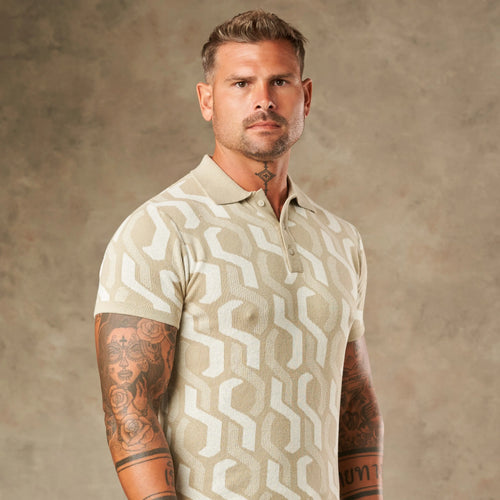
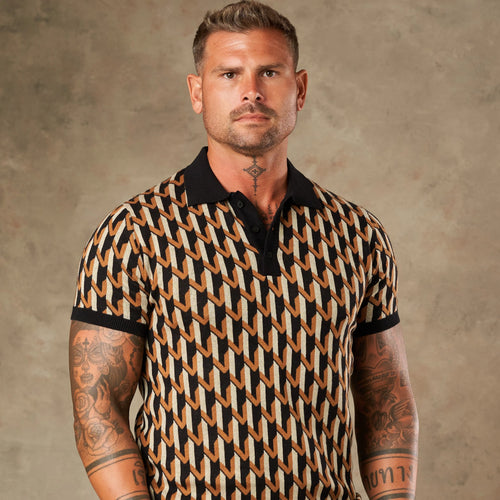
Shop the knits. Our knitted polos are cotton and made in Sri Lanka. Start with the 3D Optical Geometric Knit, the Majolica Geometric Jacquard Polo or the Moderna Graphic Statement Knit, or see all men's knitted polo shirts.
What mercerisation changes
Four things, in practice.
- Lustre. The swollen, rounder fibre reflects light evenly, so the surface picks up a quiet sheen rather than a matt finish.
- Colour depth. The fibre absorbs dye more readily. The same dye bath produces a richer, more saturated shade that also holds better through washing.
- Strength. Straightened fibres bear load more evenly, so mercerised yarn resists tearing and abrasion better than untreated equivalents.
- Stability. The treatment reduces shrinkage, because the fibres have already been swollen and set.
Mercerised vs regular cotton
Regular cotton is softer to the touch and more matt; mercerised cotton is smoother, cooler and slightly crisper. Neither is better in the abstract. A brushed weekend sweatshirt wants untreated softness. A knitted polo worn to dinner benefits from the cleaner surface and colour depth. Price follows the extra processing: mercerised yarn costs more to produce, which is one reason it clusters at the pricier end of knitwear.
- Surface. Mercerised is smooth with a soft sheen. Regular cotton is matt and slightly fuzzy.
- Hand. Mercerised feels cool and firm. Regular cotton feels softer and more relaxed.
- Colour. Mercerised holds a deeper, more saturated shade. Regular cotton sits lighter and fades sooner.
- Strength. Mercerised yarn has the higher tensile strength.
- Shrinkage. Mercerised shrinks less, because the fibres are already swollen and set.
- Best for. Mercerised suits polos, fine knits, socks and thread. Regular cotton suits sweatshirts, jersey and loungewear.
What mercerised means on a T-shirt or polo label
On a label, mercerised describes the finish given to the yarn. It says nothing about which cotton the yarn came from. A mercerised T-shirt is still cotton; it has simply been through the caustic soda and tension stage before or after knitting. In practice that shows up as a shirt with a cleaner surface, a colder feel against the skin and a colour that stays true rather than turning chalky after a season. It is a processing claim, so read it alongside the composition line rather than instead of it. Fibre quality, gauge and how tightly the yarn is spun still decide whether the garment is any good.
How to tell if cotton is mercerised
Look for the sheen under angled light, feel for a smooth, dense surface, and check the label or product page; brands that pay for the process tend to say so. A high-gloss finish on a cheap garment is more often a synthetic blend, so check the composition line first. Pure cotton with a soft lustre and a firm, fine knit is the honest signal.
How to wash mercerised cotton
The finish lasts, but heat and harsh chemistry dull it.
- Wash cool, at 30 degrees or below, on a gentle cycle and turned inside out.
- Use a mild detergent. Skip chlorine bleach, which attacks the finish and the colour together.
- Skip fabric softener. It coats the fibre and takes the sheen down to a haze.
- Dry flat or on a low heat. High tumble heat is what undoes the shrink resistance the process bought you.
- Iron on a low to medium setting while slightly damp, on the reverse if the piece is dark.
The same principles apply to any fine cotton knit. Our knitwear care guide covers washing, drying and storage in more detail.
Is mercerised cotton sustainable?
Mercerisation adds a chemical stage that untreated cotton does not have, using sodium hydroxide, a strong alkali. Responsible mills recover and reuse the solution rather than discharging it, then neutralise what is left. Ask a specific mill about its effluent handling; you cannot read it off the word on the label.
Against that, the garment is still cotton and still biodegradable, and the process makes it stronger, more colourfast and less prone to shrinking. Anything you keep wearing for years beats a drawer of shirts you replaced. If you want the environmental case for mercerised cotton, that is where it sits.
Does it matter for knitwear?
For fine-gauge knits, the qualities mercerisation brings, smooth surface, colour depth and shape retention, are the same qualities good knitting chases by other routes: fibre selection, tight spinning and a dense gauge. Our own knitted polos are knitted from 100% cotton. If you want the full picture of what separates good cotton from average cotton, our pure cotton guide goes deeper.
Frequently asked questions
What does mercerised mean?
It means the cotton has been treated with caustic soda under tension, a finishing process that swells and straightens the fibre. The result is cotton with more sheen, deeper colour, more strength and less shrinkage than the untreated equivalent.
Is mercerised cotton better than normal cotton?
It is stronger, glossier and holds dye better. It is also firmer and less soft. Choose it for polos, fine knits and anything worn smart; choose untreated cotton where softness matters most.
Does mercerised cotton shrink?
Less than untreated cotton, because the fibres are pre-swollen and set. Wash cool and dry flat and shrinkage is rarely a problem.
Is mercerised cotton breathable?
Yes. It remains pure cotton; the treatment changes the fibre surface, not its ability to absorb moisture and breathe.
Does mercerised cotton fade?
Less readily than untreated cotton. The fibre takes up dye more completely, so the colour sits deeper and washes out more slowly. Cool washes and no chlorine bleach keep it that way.
Is mercerised cotton worth paying more for?
For a piece you will wear often and want to keep looking sharp, yes. For soft, relaxed things worn around the house, you are paying for a quality you will not use.
See the knits these principles produce: our bestsellers and the Riviera collection.
Shop the knits. See also the Sorrento Chevron Knit Polo, the Interlocking Tile Pattern Polo and the 3D Optical Geometric Knit, or browse all men's knitted polo shirts.